
Something is wrong and you want to know what it is. This page walks through the symptoms we see most often at Slate Dental, what each one usually means, and what to do about it right now.
Two honest caveats before you start. First, this page is orientation, not diagnosis. The same symptom can come from several different causes, and telling them apart requires testing the tooth, not reading about it. Second, dental problems rarely resolve on their own — most of them quietly get more expensive to fix. If something on this page describes you, the useful next step is an evaluation, not more reading.
Last reviewed: August 2026
Some dental problems are medical emergencies. If any of the following apply, a hospital ER is the right first stop — not a dental office:
- Facial or neck swelling that affects breathing or swallowing
- Swelling that is spreading rapidly, or closing your eye
- Significant facial trauma or a suspected jaw fracture
- Bleeding you cannot control
- High fever together with mouth or jaw pain
Once you are stabilized, call us and we will take over the dental follow-through.
Find Your Symptom
My tooth hurts — what could be causing it?
The character of the pain narrows the cause considerably. A sharp jolt when you bite, or when you release a bite, often points to a crack. Pain to cold that disappears the moment the cold is gone usually means exposed dentin. Pain to cold that lingers for thirty seconds or more suggests the nerve is inflamed in a way that will not settle on its own. A dull, constant ache with tenderness to pressure or tapping points toward infection at the root tip. Pain that wakes you up at night is always worth taking seriously.
What to do now. Keep the area clean — brush and floss around it gently, even if it is tender, because trapped debris makes almost every one of these situations worse. Stop using that tooth until it has been properly diagnosed. Over-the-counter NSAIDs or acetaminophen can be helpful in some situations, but what is appropriate depends on your medical history and other medications, and they manage a symptom rather than address its cause. One thing not to do: never place an aspirin tablet against the gum. It causes a chemical burn of the tissue and does nothing for the tooth.
How we approach it. We test rather than guess. Cold testing, percussion, a bite test, and radiographs identify which tooth and which problem before anything is treated. See emergency dentistry.
My tooth cracked or broke — is that an emergency?
Almost always worth prompt attention. Cracks propagate. A crack confined to enamel and dentin is usually restorable; once it extends toward the pulp or down the root, the options narrow quickly and can end in extraction. Cracked tooth syndrome is classically described as pain on releasing a bite rather than on closing — in practice we find pain on biting at least as often, so either pattern is worth investigating.
Cracks show up most often in teeth carrying large older restorations, for two different reasons. Silver amalgam expands and contracts at a different rate than the tooth around it, stressing the surrounding structure over decades of use. Composite fillings do not expand — but placing one required removing significant tooth structure in the first place, and what remains is carrying more load than it was originally built to handle. Either way, the tooth is structurally compromised before the crack ever appears.
What to do now. Save any fragments in milk or saliva and bring them. Stop chewing on that side entirely. A cold compress on the outside of the cheek helps if there is swelling.
How we approach it. We assess how far the crack runs and how much sound tooth remains. Most cracked teeth are best restored with a full crown, which holds the remaining structure together under load. Where only a portion of the tooth is damaged and the rest is genuinely healthy, a more conservative onlay can be the right call. The American Association of Endodontists publishes useful patient guidance on the different types of tooth cracks.
My crown or filling fell out — what should I do?
Rarely a true emergency, but it should not wait. The exposed tooth underneath is sensitive, and without the restoration holding it together the remaining structure is vulnerable to fracturing further. If the underlying tooth is sound, the original crown can very often be cleaned and re-cemented rather than remade.
What to do now. Keep the crown. Do not use household adhesive or superglue — it is not biocompatible and it can make the original restoration unusable. We also do not recommend drugstore temporary cement: it is too thick for you to seat the crown fully, and the excess is very difficult to clean out once it sets. If you want the crown back in place in the meantime, a small amount of toothpaste underneath will hold it temporarily. Leaving it out is also fine. What matters is getting it reseated promptly, because the adjacent teeth begin drifting within days and can tighten the contacts enough that your original crown no longer fits.
How we approach it. We evaluate why it came off, because a crown that debonded cleanly and a crown that came off because of decay underneath are entirely different problems with entirely different solutions. See crowns and onlays.
My teeth keep chipping or breaking — why does this keep happening?
A single chipped tooth is usually an event. Teeth that keep chipping are a pattern, and patterns have causes. Repeated fracture almost always means the forces reaching those teeth exceed what they can withstand — through grinding and clenching, a bite that concentrates load onto a few teeth instead of distributing it, enamel already thinned by acid erosion, or teeth structurally weakened by large old restorations.
Treating each chip as it happens without addressing why it is happening produces a slow, expensive cycle: repair, fracture, repair again. Each round removes a little more tooth.
What to do now. Note which teeth are involved and whether it is always the same area. That pattern tells us a great deal about where the load is going.
How we approach it. We evaluate the bite and the wear pattern before restoring anything, so the repair is protected by a correction rather than set up to fail again. Depending on findings, that can mean a night guard, bite adjustment, or a broader restorative plan. See full mouth reconstruction.
My gums bleed when I brush — is that normal?
No. Healthy gums do not bleed when you brush or floss. Bleeding is inflammation, and inflammation has a cause. In the overwhelming majority of cases that cause is bacterial biofilm — plaque, trapped food, or hardened calculus sitting somewhere the brush is not reaching. Less often the cause is iatrogenic: an overhanging filling margin or a poorly fitting crown creating a spot that simply cannot be cleaned no matter how well you brush.
In its earliest form, gingivitis, the condition is fully reversible. If it has progressed to periodontitis — where the bone supporting the tooth has begun to be lost — that damage is not reversible, though it is very manageable once diagnosed and treated. The difference between the two is not visible in the mirror. It is measured.
What to do now. Counterintuitively, do not stop brushing and flossing the area. Most people back off when they see blood, which lets the biofilm build and the inflammation worsen. Keep cleaning gently and thoroughly, and get it evaluated.
How we approach it. We chart pocket depths and assess bone levels to stage the condition, following the classification framework published by the American Academy of Periodontology — and we check whether an existing restoration is contributing. Treatment follows the diagnosis, not the other way around. See periodontal disease treatment.
I have a mouth sore that will not heal — when should I worry?
Most mouth sores are harmless and resolve on their own within seven to fourteen days. The single most useful rule is this: anything still present after two weeks should be looked at — whether or not it hurts. That two-week mark is not arbitrary. It is the point at which a sore stops behaving the way ordinary sores behave.
Here is what we are usually distinguishing between.
Aphthous ulcers, commonly called canker sores. Round or oval, with a yellow-gray center and a red border, typically on the inside of the lip or cheek or under the tongue. They hurt far out of proportion to their size, they tend to recur, and they are not contagious. Most heal within one to two weeks without treatment.
Viral ulcers. Herpetic lesions usually begin as a cluster of small blisters that break down into ulcers, often preceded by a day of tingling or burning. Cold sores appear at the lip border; when they occur inside the mouth they typically appear on tissue bound down to bone, such as the hard palate or the attached gum. These are contagious during the active phase.
A gum boil, or draining sinus tract. This one matters, and it is frequently ignored precisely because it stops hurting. A small pimple-like bump on the gum that comes and goes, sometimes with a bad taste when it drains, is usually not a soft-tissue problem at all — it is an infected tooth that has found a path to release pressure. The pain went away because the pressure did. The infection did not.
Lesions that need a closer look. A minority of oral lesions are not benign. The features that warrant prompt evaluation are a sore that persists beyond two weeks, one that is painless, one with a firm or raised border, a red or white patch that does not wipe away, numbness, difficulty swallowing, or a lump in the neck. The side of the tongue, the floor of the mouth, and the soft palate carry more risk than other sites. And it is worth knowing that oral cancer is not exclusively a smoker’s disease — HPV-associated cases occur in patients with no tobacco history whatsoever.
None of that is meant to alarm you. The overwhelming majority of mouth sores are entirely benign and need nothing. But the ones that are not are dramatically more treatable when found early, and the only way to tell them apart is to look.
What to do now. Note the date you first noticed it and take a photo — it is much easier to judge whether something is changing when you have a reference. Avoid irritating it further with spicy or acidic food, sharp-edged food, or vigorous brushing over the area. If a denture or a sharp tooth edge is rubbing that exact spot, mention it, because chronic trauma is a common cause and an easily corrected one.
How we approach it. Every comprehensive examination at Slate Dental includes an oral cancer screening — the tongue, floor of the mouth, soft tissues, and neck, not just the teeth. For a sore that has not resolved in two weeks, we examine it, look for a correctable cause, and remove that cause where one exists. If it does not then resolve as expected, we refer for biopsy or to an oral medicine specialist. That referral is not a bad sign; it is how the question gets answered definitively rather than watched indefinitely. The American Dental Association publishes patient information on head and neck cancer and the value of routine screening.
My teeth are sensitive to hot and cold — what does that mean?
The key detail is how long it lasts. Sensitivity that stops the instant the stimulus is removed usually means exposed dentin — from gum recession, aggressive brushing, grinding, or acid erosion. That is a manageable problem. Sensitivity that continues to ache after the cold is gone is a different situation entirely and suggests the nerve itself is inflamed. Heat sensitivity in particular, especially when it lingers, tends to indicate a more advanced pulpal problem.
What to do now. A desensitizing toothpaste containing potassium nitrate — Sensodyne is the most widely available — used consistently for two to four weeks will help genuine dentin sensitivity. Switch to a soft brush and lighten your pressure considerably. A heavy hand is never correct brushing technique: it does not clean better, and it actively wears enamel and pushes gum tissue back. Cut down on acidic drinks, and do not brush immediately after having one.
How we approach it. We identify which of the two patterns you have before treating, because the answers are very different. See preventative and diagnostic care.
My jaw clicks or hurts — do I have a TMJ problem?
Possibly, though clicking by itself is common and often does not require treatment. What warrants evaluation is pain, locking, a jaw that catches when opening, limited opening, or persistent morning soreness. Jaw joint problems frequently travel with clenching and grinding, bite discrepancies, and periods of higher stress — which is why they tend to flare and settle rather than progress steadily.
What to do now. Soft foods for a few days. Avoid chewing gum and opening wide. Moist heat over the joint several times a day. Notice whether you are clenching during the day — many people are and have no idea.
How we approach it. Conservative and reversible treatment first, consistent with guidance from the National Institute of Dental and Craniofacial Research. See TMJ treatment.
I grind my teeth at night — does it need treating?
It depends on what it is doing to your teeth. The signs we look for are flattened or chipped edges, teeth that are visibly shorter than they should be, morning jaw soreness or headaches, generalized sensitivity, and restorations that keep fracturing. Grinding that is actively wearing through enamel is worth intercepting, because enamel does not grow back and the eventual repair is far more involved than a night guard.
Worth knowing: nighttime grinding has been associated with sleep-disordered breathing in some patients. If you also snore, wake unrefreshed, or have been told you stop breathing at night, the grinding may be a symptom of something else rather than the problem itself.
What to do now. Note whether you wake with a sore jaw or headache, and whether a partner has heard grinding.
How we approach it. A properly fitted custom night guard protects the teeth, and where the history suggests it, we screen for airway and sleep apnea concerns rather than treating the wear in isolation.
My teeth are wearing down — is that just aging?
Some wear over a lifetime is normal. Wear that is uneven is not, and it tells you something. Front teeth shortening while the back teeth stay intact, one side flatter than the other, or a single tooth visibly worn all indicate that forces are not being distributed the way they should be, and that some teeth are absorbing far more load than their share.
The usual contributors are grinding, a bite that does not meet evenly, missing teeth that have shifted load onto the remaining ones, and acid erosion — from diet or from reflux — softening enamel so it wears faster than it otherwise would. Frequently more than one of these is at work at once.
The reason to address it earlier rather than later is straightforward: enamel does not regenerate. Wear caught early can often be managed by correcting its cause. Advanced wear becomes a restorative problem, and rebuilding worn teeth is considerably more involved than protecting intact ones.
What to do now. Compare recent photos of your smile to older ones. Shortening front teeth are much easier to see across years than day to day.
How we approach it. We evaluate the wear pattern, the bite, and the likely contributors before rebuilding anything, because restoring worn teeth without correcting the cause simply wears out the restorations too. See full mouth reconstruction.
My bite feels off — should I wait for it to settle?
It depends on whether you have had recent dental work. A new filling or crown sitting a fraction of a millimeter high is common, easily adjusted, and absolutely worth calling about. Do not wait to adjust to it. Your body will attempt to accommodate a high spot by shifting how you close, and in the meantime that tooth takes concentrated force it was not designed for — which can cause soreness, sensitivity, and occasionally fracture.
A bite that has changed on its own, with no recent dental work, is more significant. It can mean a tooth has shifted or drifted, a restoration has failed underneath, teeth have worn unevenly enough to change how the jaw seats, or that a jaw joint problem is altering the position from which you close.
What to do now. If you have had recent work, call us — this is a quick adjustment, not an imposition. If nothing has been done recently, note when you first noticed it and whether it correlates with any other symptom.
How we approach it. We evaluate the bite as a system rather than adjusting the tooth that feels tall, since the tooth you notice is not always the one causing the problem. See TMJ treatment and full mouth reconstruction.
My teeth are crooked or crowded — what are my options?
Being direct about scope first: we do not provide orthodontics or Invisalign. If moving teeth is what you need, we will refer you to an orthodontist we trust rather than attempt it ourselves.
What we can do is tell you whether the crowding is actually causing a problem. Crowded teeth that cannot be cleaned properly develop decay and gum inflammation in the spots the brush cannot reach. Teeth in poor alignment can wear unevenly or concentrate biting forces where they do not belong. Those are functional problems worth solving. Crowding that is purely a matter of appearance is a different conversation, and a legitimate one — it just is not urgent.
Where the concern is appearance rather than position, bonding or porcelain veneers can sometimes address how teeth look without moving them at all. Whether that is the right trade — and it is a genuine trade, since veneers involve preparing tooth structure — depends on the specific case, and we will tell you honestly when orthodontics would be the better answer.
We do fabricate clear aligner-style retainers to hold teeth in position after orthodontic treatment is complete.
How we approach it. An evaluation of what is functional versus cosmetic, an honest recommendation, and a referral when a referral is what you need. See cosmetic dentistry.
I am missing a tooth — how long can I wait to replace it?
Longer than is ideal, but not without cost. The bone that once held the tooth begins remodeling away almost immediately, and the ridge continues to narrow over the following months and years. Meanwhile the teeth on either side tend to drift into the space and the opposing tooth erupts down into it. All three changes make eventual replacement more complex, and enough bone loss can make an implant impossible without grafting first.
What to do now. If the extraction is recent, ask about site preservation before the socket heals. If it has been years, replacement is often still very achievable — it just needs assessment.
How we approach it. We restore implants placed by oral surgeons and periodontists we work with, and also provide bridges and partials where those are the better fit.
One of my teeth is turning dark — is that just staining?
When a single tooth darkens while the ones beside it stay the same shade, the first thing worth establishing is whether that tooth is still vital.
If the nerve has died, breakdown products discolor the dentin from within, and the common history is an injury — sometimes years earlier, sometimes one the patient has entirely forgotten. Whitening from the outside will not correct that. If the tooth is still vital, the discoloration is more likely external staining, or an older restoration beginning to leak or fail at its margins and showing through. Both warrant an exam, but they lead to completely different treatment.
What to do now. Have it looked at rather than treating it as a cosmetic issue. A non-vital tooth can be entirely symptom-free for years while developing infection at the root tip.
How we approach it. We test vitality and radiograph the root. If the tooth is non-vital, root canal treatment comes first, after which internal bleaching can often restore the shade from inside the tooth rather than covering it up. If the tooth is vital and a failing restoration is the cause, replacing that restoration addresses both the appearance and the underlying leak.
I have a bad taste or persistent bad breath — where is it coming from?
A persistent bad taste localized to one area of the mouth usually has a specific source: an abscess draining through the gum, decay underneath an old filling or crown, food impacting between teeth through a failed contact, or periodontal infection in a deep pocket. Generalized bad breath more often traces to periodontal disease, coating on the back of the tongue, or dry mouth — which is itself frequently a side effect of common medications.
Not everything that causes a bad taste is dental. Tonsil stones — tonsilloliths, small calcified deposits that form in the crypts of the tonsils — are a common and frequently missed cause, and they will not respond to any amount of dental treatment.
What to do now. Clean your tongue, stay hydrated, and note whether the taste seems to come from one particular spot. That detail is genuinely useful diagnostically.
How we approach it. We look for a source rather than treating the symptom. Depending on what we find, that means periodontal therapy, restorative treatment to correct a failing filling or a food-trapping contact, or a referral to an ENT for tonsil evaluation. Salt water gargling sometimes helps in the interim when tonsilloliths are the likely cause.
Another dentist told me I need an extraction — should I get a second opinion?
Before an extraction, almost always yes. Extraction is the one dental decision that cannot be undone. The bone begins to atrophy the day the tooth comes out, and replacing it later with an implant or bridge is more invasive and more expensive than saving the original tooth would have been.
That said, we will tell you honestly when extraction is the right call. Teeth with vertical root fractures, severe untreatable periodontal bone loss, or decay well below the bone are genuinely not savable, and pretending otherwise costs patients money and time. The point of a second opinion is not to save every tooth. It is to be certain before something permanent happens.
What to do now. Bring the treatment plan and any recent radiographs. Records transfer often means we can evaluate without repeating imaging.
How we approach it. See getting a second opinion and tooth extraction.
Another dentist told me I need a root canal — is it always necessary?
Not always, and the distinction is diagnostic rather than a matter of opinion. Reversible pulpitis — an irritated but recoverable nerve — can sometimes settle once the cause is removed and the tooth is properly restored. Irreversible pulpitis and pulp necrosis will not settle, and delaying treatment in those cases tends to turn a straightforward root canal into an infection, and occasionally into an extraction.
The problem we encounter most often is not over-treatment for its own sake. It is incomplete diagnosis. Pain gets attributed to the nerve when the actual source is restorative — a fractured cusp, a leaking margin, a high spot in the bite, a failing filling. Root canal therapy performed on a tooth whose problem was restorative does not resolve the pain, because it never addressed what was causing it. The patient ends up with an unnecessary root canal and the original problem still present.
Distinguishing between them requires testing, not assumption: how the tooth responds to cold, whether the pain lingers, how it responds to percussion and to biting, and what the radiograph shows at the root tip. The American Association of Endodontists publishes the diagnostic terminology and criteria that this determination should be based on.
What to do now. If you are in significant pain, do not wait on a second opinion — get seen. If you are comfortable and simply unsure about the recommendation, bring the plan in.
How we approach it. We diagnose before we refer. When root canal treatment is genuinely indicated we refer to a trusted local endodontist and restore the tooth afterward. When the problem turns out to be restorative, we treat what is actually wrong. See second opinions.
What Happens When You Come In
If you are in pain or something acute has happened, we triage by phone first and fit urgent problems into the same day whenever we can. If what you have is not urgent but has been bothering you, the starting point is a comprehensive examination.
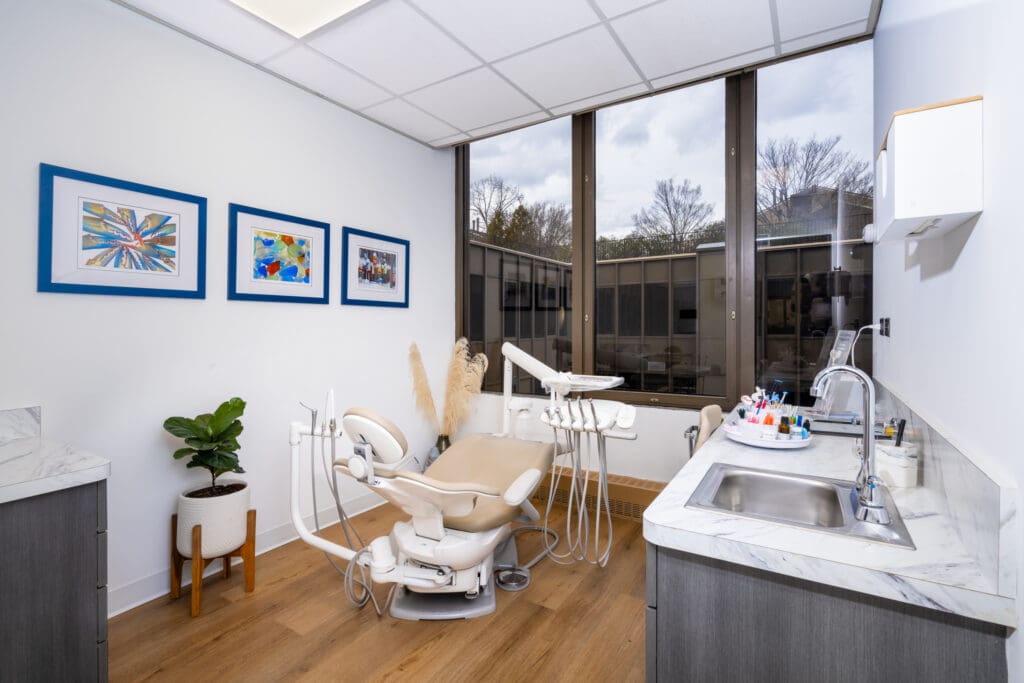
The comprehensive examination is 60 to 90 minutes of one-on-one time with Dr. Slate. He reviews your history, takes the diagnostics the situation requires, and evaluates your teeth, gums, and bite as a whole rather than looking only at the tooth that hurts.
Comprehensive oral evaluation (D0150) — $162. A full mouth series of radiographs (D0210) is $219 when new images are needed, and transferring a full mouth series taken elsewhere within the past five years avoids that fee entirely.
You leave with a written plan listing the exact fee for every appointment before any treatment begins. Details on new patient information and payment and insurance.
Slate Dental is an adult general practice in Foxhall Square, Northwest Washington, DC. We are open at 7:30 AM Monday through Friday, which lets most patients be seen before the workday. We are in network with Cigna DPPO (Total); for all other carriers we are out of network and file your claim on your behalf.
Still not sure what is going on?
That is a good reason to call. We will tell you honestly whether you need to be seen today, soon, or somewhere else entirely.
3301 New Mexico Ave NW, Suite 332, Washington, DC 20016 · Serving Georgetown, Wesley Heights, Spring Valley, The Palisades, American University Park, Cathedral Heights, and Foxhall.