
How to Find a Dentist You Can Actually Trust
A practical guide from Dr. John Slate, Washingtonian Top Dentist (2021, 2023, 2025)
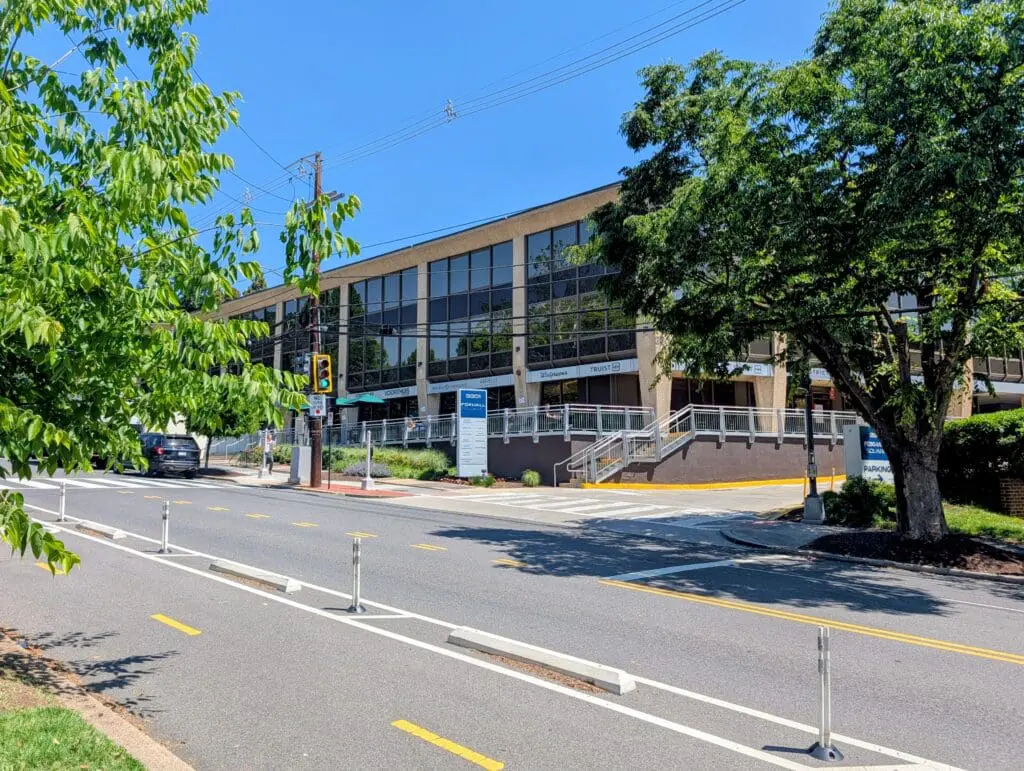
Foxhall Square, Northwest DC. Where this guide is being written, and where a lot of newly arrived DC residents end up looking for everything from a primary care doctor to a good cup of coffee.
Moving to Washington, DC means rebuilding your life from scratch. New apartment, new commute, new grocery store, new everything. Finding a good dentist usually falls to the bottom of the list, somewhere between “find a primary care doctor” and “figure out the Metro.”
The problem is that by the time you actually need a dentist, whether it’s a sudden broken tooth, a crown that fails, or a six-month checkup you’ve put off for two years, you don’t have time to research. You Google “best dentist in DC,” pick one with good reviews, and hope.
This guide is meant to give you a better way. After more than a decade practicing in Northwest DC, here is what I would tell a friend who just moved to the city and asked me how to choose.
Just want the short version? Look for a dentist who: (1) plans your whole mouth comprehensively, not tooth-by-tooth; (2) can name the specialists they refer to; (3) gives you written, itemized costs without pressure; (4) shows you their actual patient work; and (5) has been peer-recognized over multiple years, not just by online reviews. Everything else in this guide is an explanation of why these matter.
Start by Understanding What Kind of Dental Practice You Actually Want
Not all dental offices are the same, and the differences matter more than most patients realize. Broadly, DC dental practices fall into a few categories.
Insurance-driven, high-volume practices. These offices are built around insurance reimbursement. They see a lot of patients per day, often using multiple hygienists and rotating doctors. The care can be perfectly adequate for routine cleanings, but if you ever need something complex, like a crown, an implant, or a treatment plan that spans multiple visits, the assembly-line model starts to show. You may see a different dentist each visit. Treatment plans tend to follow what insurance will cover, not what you actually need.
Corporate dental chains. Often advertised heavily online. The clinical care is variable because dentists rotate, and the business model is centered on production targets. If you’ve seen ads for “$59 cleanings,” this is usually the model.
Fee-for-service practices. These offices choose not to participate in insurance networks. Patients pay the practice directly and submit to their insurance for reimbursement. The trade-off is straightforward. You pay more out of pocket, but the dentist has the time, materials, and clinical freedom to do work that lasts. For complex restorative or cosmetic work, this matters a great deal.
Specialty practices. Periodontists for gums, endodontists for root canals, oral surgeons, orthodontists, and prosthodontists. You typically see these by referral when a general dentist can’t handle the complexity in-house.
If you have generally healthy teeth and just need cleanings and the occasional filling, almost any model works. If you have any complex history, like old crowns, root canals, missing teeth, prior orthodontics, or anxiety about dental work, the model matters enormously.
What Actually Distinguishes a High-Quality DC Dentist
Once you understand the landscape, here is what to look for.
1. Comprehensive treatment planning, not piecemeal fixes
A dentist who looks at one tooth at a time will treat one tooth at a time. A dentist who looks at your whole mouth will plan in a way that prevents the next ten problems before they happen.
The single best indicator of a high-quality practice is how the first appointment goes. If you come in with a chipped tooth and the dentist focuses only on the chipped tooth, you’re getting transactional care. If they take comprehensive records, look at how your bite functions as a system, ask about your goals five and ten years out, and present a plan that addresses root causes, that’s comprehensive care.
This is especially important if you’re in your 30s, 40s, or 50s and starting to see old work fail. Treating each failure in isolation usually leads to compounding failure. Treating the whole picture once usually leads to decades of stability.
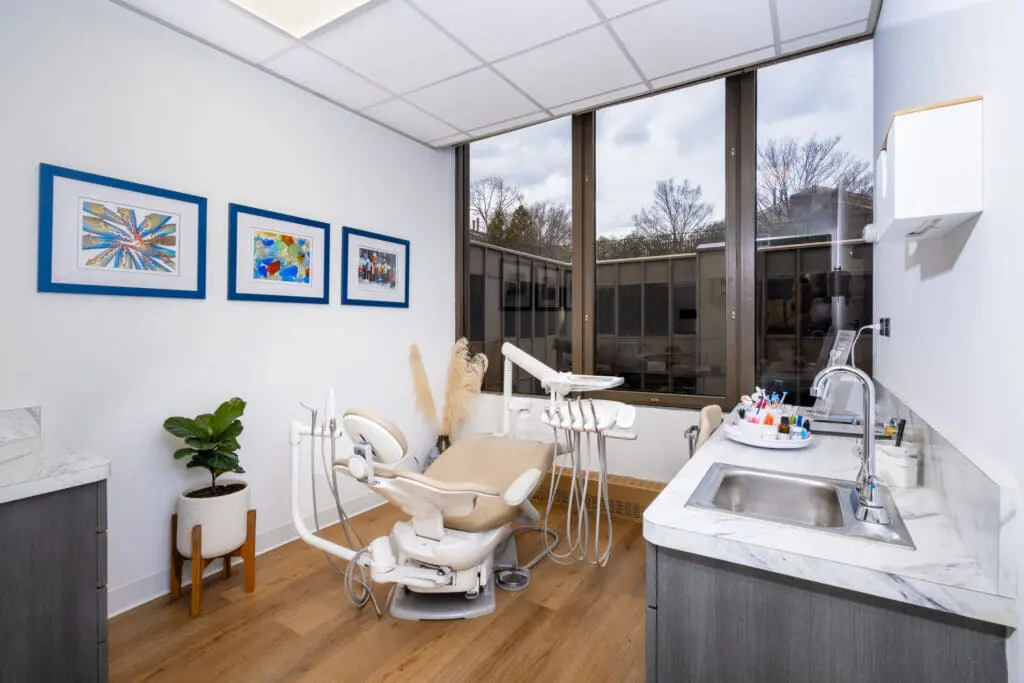
A new patient appointment at Slate Dental is scheduled for 60 to 90 minutes. Comprehensive conversations cannot happen in 20-minute slots.
2. A strong specialist referral network
No general dentist should do everything. The best general dentists know exactly what they should and shouldn’t handle, and they have relationships with specialists they trust completely.
When I take on a complex case, I am almost always working with one or more of:
- A periodontist for advanced gum disease, implant surgery, or soft tissue grafting
- An orthodontist for tooth movement that sets up restorative or cosmetic work to be conservative and predictable
- An endodontist for root canals, especially retreatments or complex molar cases
- An oral surgeon for extractions of compromised teeth and complex bone grafting
Of these, orthodontics is the one most patients underestimate. Adult orthodontics is rarely about straightening teeth for appearance alone. When teeth are positioned properly before restorative work begins, we can design crowns, veneers, and implants that fit each patient’s unique anatomy without removing healthy tooth structure unnecessarily. A case that would require eight aggressive veneers without orthodontics might require four conservative ones with it. Patients who skip this step often end up with more invasive dentistry than they needed.
When you interview a new dentist, ask who their referral specialists are. A dentist who can name specific specialists they trust, and explain why, is showing you the team that will actually take care of you. A dentist who refers reluctantly, or tries to do everything in-house, is a warning sign.
For full transparency, here are some of the specialists I refer to most often in the DMV:
- Periodontics: Dr. Puterman & Dr. Barth in Bethesda; Dr. Lindsay Friedman downtown DC
- Orthodontics: Dr. Andrew Schwartz, with offices in Rockville and downtown DC
- Endodontics: Dr. Scott Hetz at Advanced Endodontics, downtown DC
These are not exclusive partnerships. They are dentists whose work I have seen consistently over years and trust completely with my own patients.
3. Honest conversations about cost and trade-offs
DC is an expensive market, and good dentistry is not cheap. But there’s a difference between expensive and dishonest. A trustworthy dentist will:
- Give you a written treatment plan with itemized costs
- Explain why each item is being recommended
- Offer alternatives at different price points where they exist
- Tell you which items are urgent versus which can wait
- Discuss financing options without pressure
If the financial conversation feels rushed, vague, or focused on closing you, that’s a problem. If it feels like a real conversation between adults about what makes sense for you, that’s the practice you want.
4. Real before-and-after work, not stock photos
Any dentist can put generic smile photos on a website. The dentists doing serious cosmetic and restorative work have galleries of their actual patients with documented case stories. Not just “before” and “after,” but the reasoning behind the treatment plan, the technical decisions made, and the long-term outcome.
Looking at a dentist’s smile gallery tells you what kind of cases they actually do. If every photo looks the same and there are no complex reconstructions, you’re looking at a practice that handles cosmetic touchups, not full rehabilitation.
5. Awards that mean something
DC has several legitimate “top dentist” lists, primarily Washingtonian magazine and Bethesda Magazine. These are based on peer surveys, where dentists nominate other dentists they would send their own family to. They are not perfect, but they are meaningful. A dentist named to one of these lists multiple times over multiple years has the sustained respect of their peers.
Be cautious of “America’s Top Dentist” type awards that anyone can buy. The real ones are the local peer-nominated lists.
Questions to Ask Any DC Dentist Before Becoming a Patient
If you’re shopping for a new dentist, here are questions worth asking on the phone or at a first visit:
- How long is a typical new patient appointment? Anything under 60 minutes is rushed.
- How do you handle insurance? In-network, out-of-network, or fee-for-service. Each has trade-offs you should understand.
- Who are the specialists you refer to most often? They should be able to name them.
- How do you approach complex treatment planning? Listen for “comprehensive,” “foundation,” and “long-term,” not “tooth by tooth.”
- What is your philosophy on saving versus extracting teeth? You want someone whose default is to save.
- What is your approach to adult orthodontics before restorative work? A dentist who never recommends orthodontics is probably over-treating with restorative.
- Can I see a smile gallery of your actual patients? Real cases, with treatment details.
- How do you handle dental emergencies for established patients? Direct doctor access matters.
Slate Dental serves patients throughout the DC Metro area, with particular convenience for those living in: Foxhall Square, Spring Valley, The Palisades, Wesley Heights, American University Park, Cathedral Heights, Chevy Chase, Georgetown, and Bethesda.
If You Made It This Far
You now know more about evaluating a DC dentist than most patients do. Whether you end up at our practice or somewhere else, you are equipped to choose well.
If the principles in this guide describe what you are looking for, we would be glad to meet you. New patient consultations at Slate Dental are unhurried, include comprehensive records, and come with no obligation to schedule treatment.
Or call (202) 686-5222.
We are located at 3301 New Mexico Ave NW, Suite 332, in Foxhall Square.